Answer Writing Chapter 2: Understanding the Question

It is not uncommon to see that aspirants are not able to understand the questions. There can be a few reasons for this: 

  1. You are not aware about that particular topic.
    • Sometimes, you are a bit familiar but don’t know much about the topic asked in the question. Sometimes, you know where the question is from but you have not studied that portion from that part of the syllabus or missed that topic. Or maybe you are vaguely aware of it.
    • In these situations, try to understand the broader context of the question and answer from that broader perspective only. This is because you are not too familiar, therefore it is best to just write an average answer without much details.
  2. You are not able to understand what exactly is question asking.  
    • Sometimes the question itself is framed in a statement form that it becomes difficult to decipher it entirely. This trend has reduced in recent years. In 2021, pretty much straight forward questions were asked.
    • However, I will still show you some questions along those lines.  

For understanding the question, you need to follow these steps: 

  1. First, look out for the keywords of the question first. These are the main concepts that are asked in the question. These will give you a hint about what you have to answer. 
  2. Second, underline these keywords in the question paper so as to focus on them while thinking about the answer. 
  3. Third, If the question is long, divide it into small parts and try to decipher these smaller parts. Then it will become easier to understand the entire question if you understand the smaller parts first. 
  4. Fourth, try to recall from which part of syllabus the question has been asked. Sometimes, you might draw a blank at the first reading of the question. But reading it quickly 3-4 times will help. 

Let’s decipher this with an example
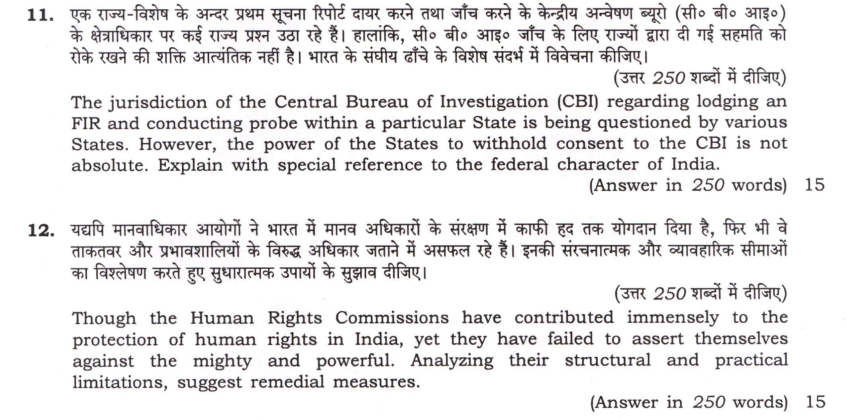
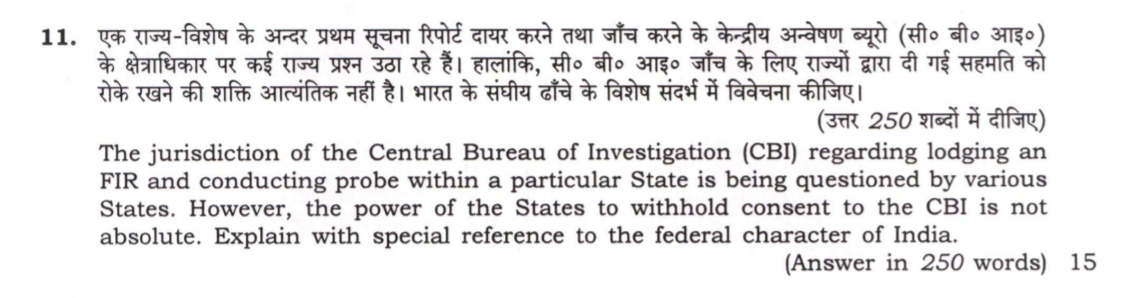
In question number 11, it can be slightly confusing, what UPSC is asking. How will I read and understand this question in order to answer it to the point?

First, I will see the keywords. These are the main concepts that are asked in the question. These will give you a hint about what you have to answer. 

Here the keywords are CBI, its powers in states, and federal character of India. 

Therefore, it is clear from reading these keywords that UPSC is asking question about CBI and its powers in our federal structure. 

If you still don’t understand the question, further divide it into small parts and read and try to understand each part. Do it over and over again. Don’t give up in first two times. Try four five times and eventually you will start getting a hold of such questions. 

Now try this technique I just told you on the next question 12. 

In this question, it is not as confusing as the first one. If you read the question in parts, here, UPSC Is asking a question about Human Rights commission. UPSC has asked about practical and structural limitations of Human Rights Commission. That’s it. You just have to write about those two major points.

I have seen many aspirants trying to write something about the first two sentences given in the question. That’s not really needed. You can completely ignore that part and just focus on answering what are the practical and structural limitations of HRC. If you try to somehow provide a context from current affairs based on the first opening statement of this question, it will become almost impossible to answer it within the word limit and you won’t do justice to the body of the question.

So, why don’t you try answering the second question in the comments!

Answer Writing Chapter 1: What makes for a good answer?

First and foremost, it is the — content. What you write in the answer, your words, the information you put down, and the analysis you build around it (when needed), matters the most.

Nothing but good content makes for a perfect answer for UPSC. Even if you don’t have the diagrams, the drawings, the underlines or anything. If the answer is made up of really good content, it is going to get marks. Because UPSC evaluates the quality of your content and not much else.

Presentation — Diagrams, underlining, tables etc. have a minor role to play 

Of course, using diagrams, underlining etc. helps to present your answer in a better way. They might also help you get 1-2 marks extra in the answers. But only if your answer has good content first. 

The presentation helps in improving how the examiner is able to swift through your answers. However, if the presentation is really good but the content is sub-optimal, you will not get the marks. If the content is good but the presentation is sub-optimal, you will still get good marks. 

Therefore, if you are trying to put in too much time into presentation instead of content, you are not on the right path. You should focus first on mastering various topics of the syllabus so that you can write good content in the answers. Later, you can learn from this book how to present your answer to get those extra marks in your answers. 

The question arises, what is good content? What all points should we cover to make our answer such that it gets good marks? 

Here are a few things that make the answer good (content wise):

  1. Your answer must showcase your understanding of the question asked by UPSC: (in short: answer what has been asked, don’t beat around the bush)

The first most important thing is about answering what has been asked in the question. Aspirants who might not be aware of the topic asked, might not be able to write well on it. Therefore, it is important that you first cover the static and current affairs topics and then work on your answer writing to master it. 

For example, 2021 paper had this question in GS 3:

Distinguish between Capital Budget and Revenue Budget. Explain the components of both these budgets. (150 words) 10 marks

In the question, the examiner is asking you two straight-forward questions: 

(1) the difference between Capital Budget and Revenue Budget, you must know the basic difference between these two in order to get marks. 

(2) Components of these two. 

You cannot possibly expect to just write ‘anything’ when it comes to this very specific concepts like ‘capital budget’ and ‘revenue budget’ and get marks. It is simply not going to happen. 

Therefore, have your basic concepts clear first. When the question is asked about these concepts, answer them clearly, in a crisp and simple manner. Get straight to the point without much circling around. 

Here is how I would answer this question. Note, that I will be to the point, not beating around the bush. I will use simple language, easy to understand words, and also use some keywords.

Answer: 

Budget can be defined as a financial statement which provides for yearly estimated receipts and expenditures of the government.

Following are the components and differences between revenue and capital budget:

Capital Budget Revenue Budget 
1. Capital budget can be defined as budget that accounts for expenditures that are fixed and one time in nature. 1. Revenue budget can be defined as budget that accounts for expenditures that are recurring or regular in nature.  
2. This accounts for government’s estimated capital receipts and capital expenditure.2. This accounts for estimated revenue receipts and revenue expenditure.
3. Two components of Capital budget are capital receipts and capital expenditures.4. Two components of Revenue budget are revenue receipts and revenue expenditures. 
5. Capital receipts include market borrowing of debt etc.  6. Capital expenditure is the expenditure of the government which creates assets·       For example: it includes spending on defence equipment, roads, school builds etc.   6. Revenue receipts include tax revenues such as income tax, GST and non-tax revenue like interest etc.– Taxes are the highest portion of revenue receipts7. Revenue expenditures include regular expenses of government.  ·   For example: spending on salaries of officers, repairs of buildings etc.

Note: No conclusion is really needed here.

Here, note that presentation in a table format makes it much easier for the examiner to quickly check this question. 

However, if I had not written the points I have given in this answer, would I still have got marks? Definitely not! 

Because, capital and revenue budget have a very specific definition and components and you should know them. Then only can you answer the question. On the other hand, if you had not written this question in table format but still provided the same content as above, you would still get good marks for knowing the content and the topics asked by the question. 

Not all questions in UPSC are created equal! 

The above is a simple example, however UPSC often asks difficult questions where knowing exactly what has been asked also becomes a challenge. 

For example: 

This question will need you to give it a couple of readings, understand all the components it is asking and then attempt it. Hence, not all questions are straight forward, and you will need good reading skill to interpret these kinds of questions.

I will discuss the above kind of question and how to understand and solve it in the future post in the second chapter.

UPSC fundamentals that all aspirants should know…

As aspirants, we often forget to focus on the fundamental things we need to know about UPSC.

I am not going to give you any strategies or steps in this short write-up, but simple advice on why you need to get back to the basics if you want to excel in UPSC.

  1. First, you should master the basic concepts.
    • That’s why NCERT is advised by so many toppers! Master the static subject. Without the basics, you can’t expect to know the more nuanced and detailed content.
    • You can’t be expected to answer prelims questions and write well in mains unless you understand the pure basics of that topic.
    • For example, if you want to solve a bond related Economics questions of UPSC in prelims, you should understand how inflation could move with change in interest rates by the central banks
    • In last few years, UPSC has majorly shifted its focus on questions that check your fundamental knowledge consistently for years.
    • So, if you think that pattern is changing and all, that’s just on the surface. If you know the basics, master them, you can write exam any year and do well (with some practice of course)
  2. Second, you need to stop philosophizing this exam.
    • You need to get it done! Start today. Don’t think too much about where and how. Where ever you feel comfortable is okay.
    • For instance, if you are good at polity, start there.
    • Don’t over-strategize or wait for a perfect plan.
    • Instead of thinking about strategies, sit down and study. Strategies are hundreds, but execution is far less. So sit down and study!
  3. Third, after you have mastered the fundamentals, practice, practice, practice.
    • Practice becomes the key after your static part is set. The battle afterwards really boils down to how broadly you have covered the syllabus, how many papers you have practiced, how fast and well can you write (crisp and well-rounded answers) etc. that I keep discussing in my video classes.
    • Remember, if Sachin Tendulkar was good at cricket, interested in it, made a lot of plans, but never actually went out to practice day and night, would he be so successful? Nope!
    • Same applies to you. Practice is the last walls you need to break for success in UPSC.

How to Read Effectively for any exam? 8 Steps.

Reading well is the key to success in any exam. Even in general if you are a good reader, it helps! 📚

As an aspirant, I used to give a lot of time to developing little ways to enhance my learning techniques.

Hopefully, these will help you to become a better learned as well!

These are the things that you can try to follow and improve your reading and learning style:

  1. First, you should read and understand the Table of Contents broadly. This helps you to know what’s to come and what’s the overall story
  2. Second, look and compare the table of contents with the syllabus and topics given for your exam. This helps you highlight main topics, associate and remember through mental mapping
  3. Google the chapter heading and quickly skim through the main highlights on search results. Look at the Google images to get a rough Visual idea — creates visual references in mind and makes recalling easier
  4. Read the headings and sub-headings of the chapter. This helps you understand what dimensions you need to know about the topic.
  5. Read the exercises given at the back of the chapter before reading the chapter. It will help you to know the important topics of the chapter.
  6. Look at the chapter maps, images, tables etc. given. This will help you to further create mental maps and images and remember the important ones
  7. Now, go ahead and read the chapter!
  8. Finally, when you do Previous Year Questions practice, try to remember which chapter the question might be from. This enhances your memory and recalling and connects the dots!

@manujjindalias

How to study current affairs for prelims?

I am going to tell aspirants four major things they should focus on while studying current affairs for prelims:

  1. Sources
  2. How to study these sources?
  3. Make notes or not for current affairs?
  4. How to solve and study previous year questions for current affairs…

Sources

There are four sources for prelims:

  1. The Hindu newspaper or the Indian Express
  2. Vision IAS monthly current affairs compilations
  3. GK Today monthly current affairs compilations
  4. Using Google effectively for searching topics and studying them

How to the study the above sources:

  1. As for the Hindu Newspaper or the Indian Express — Pick only one.
    • Remember that you are reading this for two purposes —
      • Firstly, to improve your reading skills, which will further help you to improve writing skills as well.
      • Secondly, to get familiar and aware about what is going on in the world — what are the major trends, what are the major events, developments — political, technological, economical, environmental, social etc.
    • Newspaper will not be a direct source from where you will remember many questions coming in the exam. But without newspaper, you will not be able to become holistically strong about the level of awareness and intellectual capability/width you need to have for UPSC.
  2. Vision IAS monthly current affairs magazine and GK Today monthly compilations should be your two primary sources for reading about all the current affairs, and for revision as well.
    • Why do I recommend two magazines? Because, Vision IAS will help you to prepare for mains as well, and GK today is purely prelims focused and covers more routine facts and information also which Vision IAS does not cover.
    • I believe, having two good sources for 1 topic (apart from some Googling) is a must for UPSC. it helps to break monotony of studying from one source. It also helps in covering wider aspects and some more nuanced things that are otherwise missing in preparation sometimes.

Making Notes and Google

  • NO, just write on the margins of current affairs magazines print outs. CA notes are totally useless.
  • Using Google Effectively: Just google the topic and look for 1-2 main sources for that topic. Let’s say the topic is Artificial Intelligence or DNA technologies. Just google and look at the Wiki page, go through it quickly, read some interesting developments in the field in major publications, that’s it.
  • Focus on things UPSC would ask: characteristics of the technology, major organizations etc.

PYQs

  • Print out old UPSC papers or get a PYQ book
  • Do at least last 10 years PYQs 2-3 times. Know them cold. Some will repeat for sure.
  • Try to see major trends — questions from sports are a new development, or questions from certain environmental facts UPSC likes to ask
  • Test yourself
  • Practice elimination — and the way UPSC frames questions (keywords etc.) shown in one of my video classes on youtube.

How to Stop Procrastination? #mentalhealth

Procrastination is not just a poor habit, but a mental health issue.

As an aspirant I faced the problem of procrastination in my early preparation days. At that time, I couldn’t exactly pinpoint why I was doing so. But I was able to overcome this through some introspection and actions that helped me.

I would like to share some of those techniques to beat procrastination with aspirants and students. You can follow these techniques, but remember these work only if you commit yourself to truly introspecting and follow it up with actions.

  1. Identify your Desire
    • Desire is a powerful emotion. It is what kick starts your journey towards what you want.
    • For example, your desire to be an IAS officer, a pilot, an entrepreneur, a scientist, or becoming CEO of an MNC. Without an inherent desire, it is difficult to find the direction you are moving into.
    • Therefore, introspect and identify your desire. What drives you?
    • Remember, the process to be followed for achieving your desire is going to be tough, very tough. For me, I wanted to be in the IAS, the process was so difficult and full of mental health issues and struggles.
    • But that being said, desire must exist. If your desire is not strong enough, you will not have a goal to move towards.
  2. Pleasure and Process go hand in hand — develop them
    • Most great things in life are a marathon, not a sprint. Most memorable cricket innings are those from the Test matches, not T20s!
    • Similarly, most of the desires in life need you to develop a process that you have fun going through.
    • If Sachin Tendulkar just wanted to become a great cricketer (his desire) it wasn’t enough! He had to develop a rigorous physical and mental routine, a very good process to get there. Along the way, he also had fun through the journey.
    • When you are studying for UPSC, develop a strong process — which means, time table, small but achievable goals, check list, dedicated time slots to take tests etc. This is the process.
    • But have fun while doing it. Try to connect with other good aspirants online. Learn from them. Compete with them. Talk with them. Take out time for family and take breaks when you achieve these goals. Make the process worth doing it!
    • I used to do this by taking small breaks every week with an episode of Friends, or a movie, or just going to see a historical site in Delhi — learning with fun!
  3. Address your fear of failure early in the journey
    • Procrastination also happens due to fear of failure.
    • You can beat fear of failure by addressing it early in your journey.
    • To do so, remember and remind yourself of two things:
      1. The outcome actually does not matter, the journey does. ‘Karma’ matters, not the ‘Phal’ — this is the most powerful motivation technique. The day you stop worrying about the result and focus on the process, the Karma, you truly have moved 1 step closer to the goal.
      2. Failure is not actually failure — Failure is one step closer to success hidden in many negative emotions. Failure feels horrible, but trust me, if you learn from your failure, you are beating so so many negative emotions and getting there!
  4. Where to start, just do it!
    • Procrastination also happens when you don’t know where to start.
    • Let me give you a simple tip, just start. Push yourself to take that extra step. There is no other alternative solution. It doesn’t matter where you start, as long as you do..

I say, just think about the above things. Contemplate on them. Take baby steps. I am sure you can beat your procrastination like I did 🙂

Operation Vaccination Binagunda

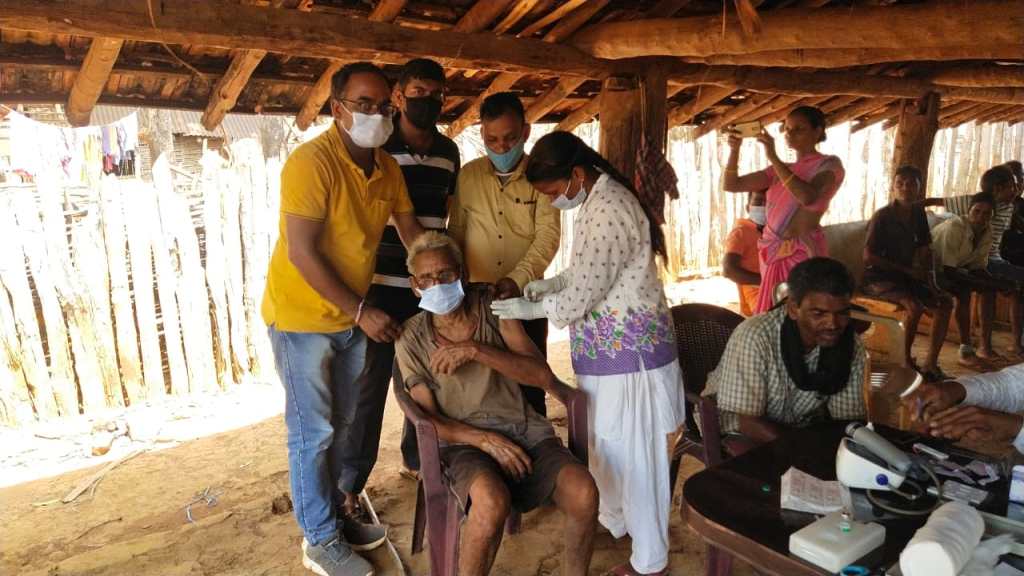
Maruthi, the young son of Binagunda’s patil (village head) has been working as kotwal with Bhamragad administration for the past few years. A few days back he trekked over 20 kilometers to inform Bhamragad Tehsildar that health team couldn’t find any success in vaccinating Madia tribals of Binagunda and other nearby villages. All villagers had refused to take vaccination from a health team that traveled to these areas recently. The fear of Covid rampaging his village in the next wave was clear in his hushed but concerned tone. The monsoon would also play spoilsport, as these villages would be cut off from the rest of the civilization for four months or so. The administration would lose any opportunity to vaccinate them at that time. The kotwal himself had been vaccinated, but he had not been able to convince many of his village folks. “Sir, please visit the villages, we need to convince our people to take the vaccination…”

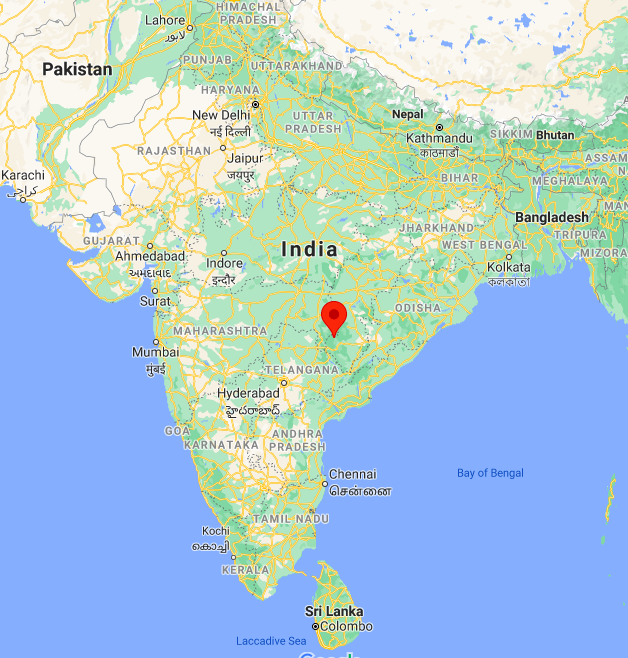
On the evening of Buddhapurnima, May 26, the tehsildar called me about the problem at hand. We decided to chart a plan to vaccinate every eligible person of Binagunda and other villages nearby. After much deliberation, we decided to organize four vaccination camps on the line of election booths: one in Kuwakodi (the eastern most Gram Panchayat of Maharashtra), Permilbhatti, Fodewada and Binagunda each. All located in the infamous Abhujmarh, often referred to as the ‘liberated-zone’ by Naxalites, these villages are home to the Madia tribe that is recognized as Particularly vulnerable tribal Groups by the Government of India. Due to primitive nature of their lifestyle (by no means inferior), these tribes continue to live in seclusion from the rest of the world. Our fear lay in the cold hard fact that if the recent strains of Covid 19 make its way to these villages, lack of health facilities and immediate care could potentially lead to much misery and loss of human life. One way to address this problem would be to vaccinate as many persons of this area as possible, on a war footing level.

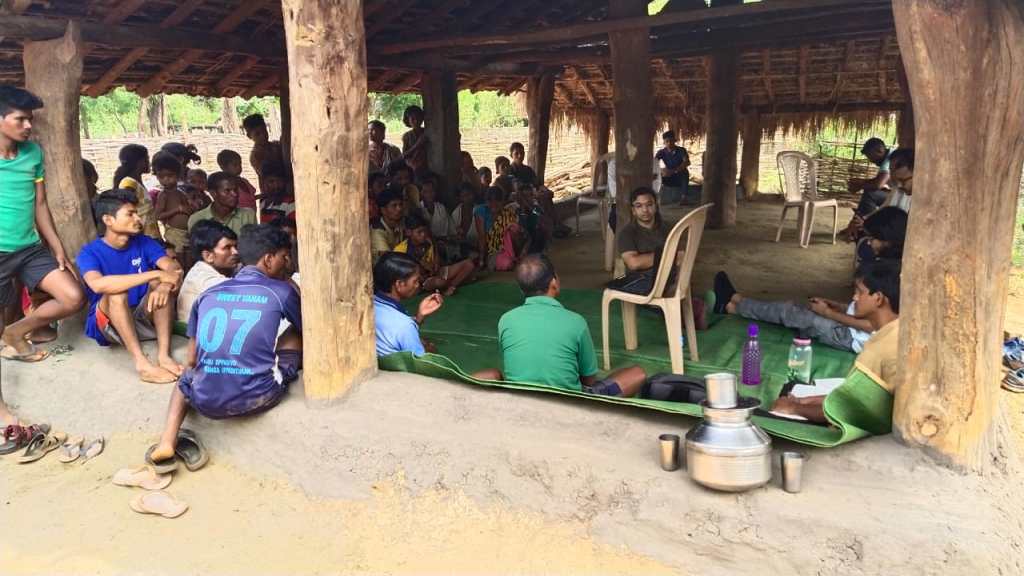
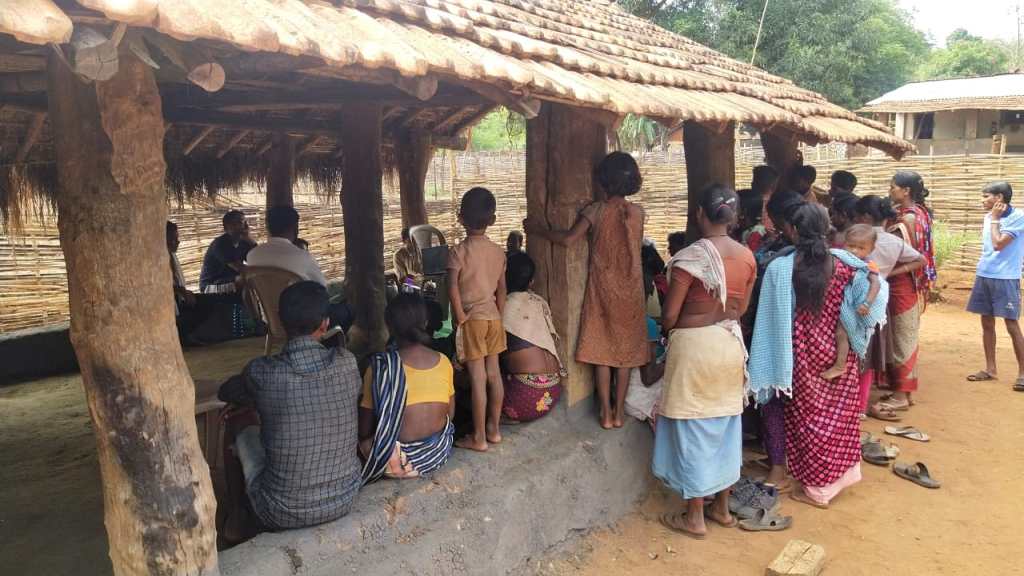
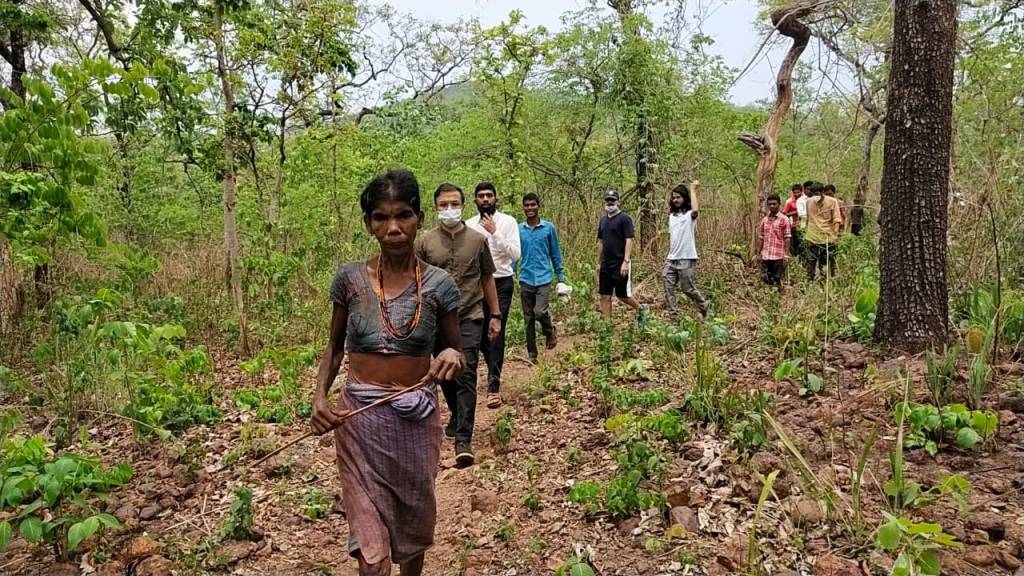
The vaccination camps were held on the lines of election exercise. It would have three components. First, an intense awareness campaign would take place in each village on Friday, May 28th. The administration team along with all the Patwari, Kotwals, and persons with influence in the area would travel to each village and organize meetings in the Ghotuls, the traditional meeting halls of the Madias. The traveling itself was dicey as our vehicle crossed at least five flowing rivulets, removed heavy stones along the forest trail and was stuck multiple times on a hilly and inaccessible terrain. All the villagers were informed in advance about the meeting and times were communicated by kotwals on foot the previous day. The first meeting was held at Fodewada, a hamlet of around 30 houses. The ‘ice-breaking’ session, as Tehsildar Anmol Kamble liked to refer it to, was done by talking about general issues faced by the villagers. It was key to establishing some rapport with the villagers. This was followed by transitioning to the topic of health and Covid. A video of local leaders and influencers like Prakash Amte ji, who has a very recognizable face in Bhamragad was shown to all. It instantly struck a chord with many of them as all the influencers spoke in their language, explaining Covid and how vaccination could protect them. Afterwards, we took the questions of each villager with much patience. In the classic dialectic method, which is still practiced in this area, both sides presented arguments. One of the village seniors wanted us to visit the nearby water source first and address the water problem as well. She led the way as we trekked almost a kilometer in deep jungle to learn that she had been ferrying water on foot for all her life. It was her chance to have us feel the problems she lived everyday. The meetings went much beyond the Covid as they enabled us to note many problems faced by these inaccessible areas. By the end of the day, the team noticed that it had taveresed over 10 kilometers on foot while walking through these villages. Eventually, home visits and Ghotul meetings ensured that all the villages were convinced to get vaccination by the end of the long but fruitful day.

The next morning, ‘vaccination booths’ was set up in each village. Two health teams traveled with vaccine in the pulse polio cold boxes, now used for storing and transporting Covid vaccine in the nearby areas. The vaccination booth agent was armed with the list of all villagers above 45 years of age. These were extracted from the electoral rolls already available with the administration. The first to get vaccinated was the local Patil, Maruthi’s father. He led by setting an example for all to follow. One by one, as the villagers trickled in the booth, their aadhar card numbers were written down and vaccine shots were administered after testing their blood sugar levels, blood pressure and other vitals. Many were encouraged to come out of their houses and get vaccinated. A little hesitation and concern was still visible on some old, sun-spotted faces, but much of the vaccination team couldn’t hide a huge sign of relief on theirs. 59 out of 68 persons, almost 87% of the entire eligible population were vaccinated. Almost everyone beyond 18 years of age is eagerly awaiting for their chance as well. As the day ended, we knew that with the right awareness campaign, some personal touch from vaccination warriors, and a clear system and process of vaccination, we could defeat vaccine hesitancy and vaccinate one village at a time in the entire area.

I would like to give all the credit of this Operation Vaccinate Binagunda to Tehsildar Anmol Kambde and the team, Sattu, Kotwal-Phodewada, Dinkar Kotwal-Turremarka, Chukku Kotwal-Kuvakodi, Maruti Kotwal-Binagunda, Shankar Kotwal-Laheri, and Akash Kotwal-Malampodur.

“It’s Okay to Miss”

Nelgunda has remained a bastion of Naxal activity for years now. Its proximity to Chattisgarh, lack of any government presence in the area, complete absence of schools and medical facilities, and location in the deep jungles make it suitable for guerilla warfare and for activities of ‘jungle ke log’. That is how the locals refer to the Naxal militia here. 

Nelgunda lies on the border of Chattisgarh and Maharashtra in the ‘Abhujmarh’ area..

I met the Amtes of Lokbiradri Prakalp and had long discussions about a variety of topics, including the education system in these interior areas. Lokbiradri Prakalp established by Shri Prakash Amte runs a large hospital and schools in Bhamragad. Shri Amte’s words are that of gold in these rough, government-less areas. Years of selfless public service for the tribals has earned the project so much goodwill that not even the staunchest of the Naxals target them. 

Aniket Amte and his wife Samiksha suggested why not I visit a school they had been running in Nelgunda for a few years now.  A parents-teachers meeting day was to be held soon. They invited me to join them for a day full of fun activities at the village. I thought this was a perfect opportunity. They directed me to meet at Lokbiradari Project sharp at 6 am to start our 2 hour long drive. We hopped into a Tata Safari, with Lokbiradri Prakalp painted over it. This certainly assured me that traveling with them would be safe and also ensure that I can listen to the grievances of the people first hand while with them. Afterall, people from these villages talked to the Amtes freely and openly. 

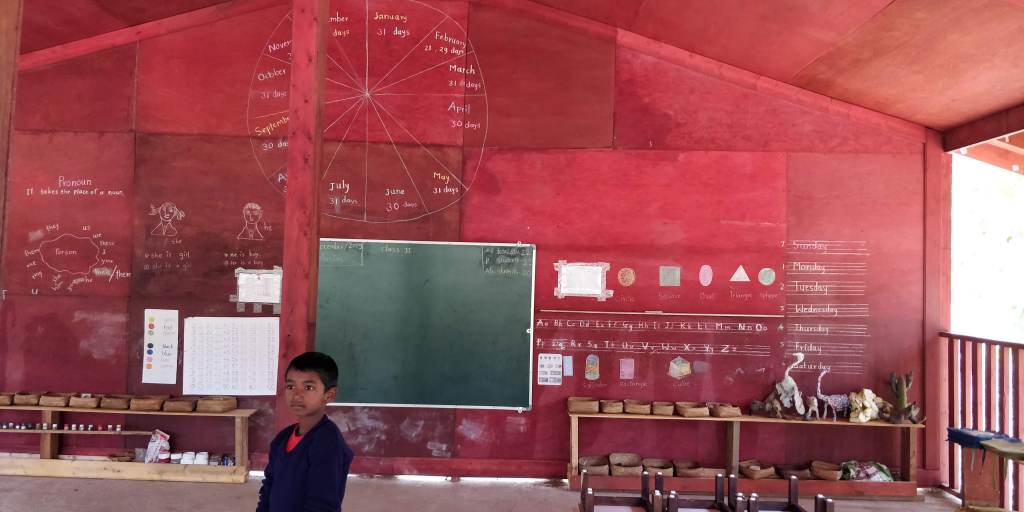
The beautiful classroom of Sadhna school at Nelgunda, a strong-hold of CPI-Maoist party

My ride to Nelgunda was more than just memorable. At first it was comfortable and the scenic beauty of the forests surrounding us with patches of bright, green rice fields was mesmerizing. A  camera can never do justice to such a beauty. Forty five minutes into the drive we turned rightwards at Dodhraj village and made our way onto the kaccha paths towards Nelgunda. The next two or so hour kaccha road was certainly more beautiful but also treacherous. It didn’t help that I had forgotten to eat in the morning. The Amtes had offered breakfast at their home, but I felt I couldn’t impose and declined, much to my own dismay later! 

The SUV easily made its way through the intense jungles and the streams that flowed across every few kilometers. At some stretches, it seemed that kaccha road was recently cleared of mud and stones and paved after some intense labour work. Curiously I inquired Aniket about this. He told me that the villagers had repaired the road last night just so that our vehicles could pass freely. This surprised me! It only spoke volumes about the respect and importance villagers attach to the work done by the Amtes in these areas. 

At one spot, we noticed a burned down vehicle and police drawn lines of a corpse on the ground. We stopped for a moment, then Aniket decided to swirl his vehicle from the side and drive across. He informed me that a person was shot dead last night by the Naxals right on that spot and the vehicle was burned down. He also pointed to a tree across the river where a prominent tribal leader from the Congress party was hanged to death after he refused not to withdraw from running for elections on command of the Naxals. After he died of the hanging, he was shot multiple times to send a stern message across the entire area. Noone could defy the writ of the jungle ke log. I couldn’t believe he decided to break this rather important piece of information with me after bringing me 50 kilometers deep into the red territory! Alas, I had no choice but to continue my ride.

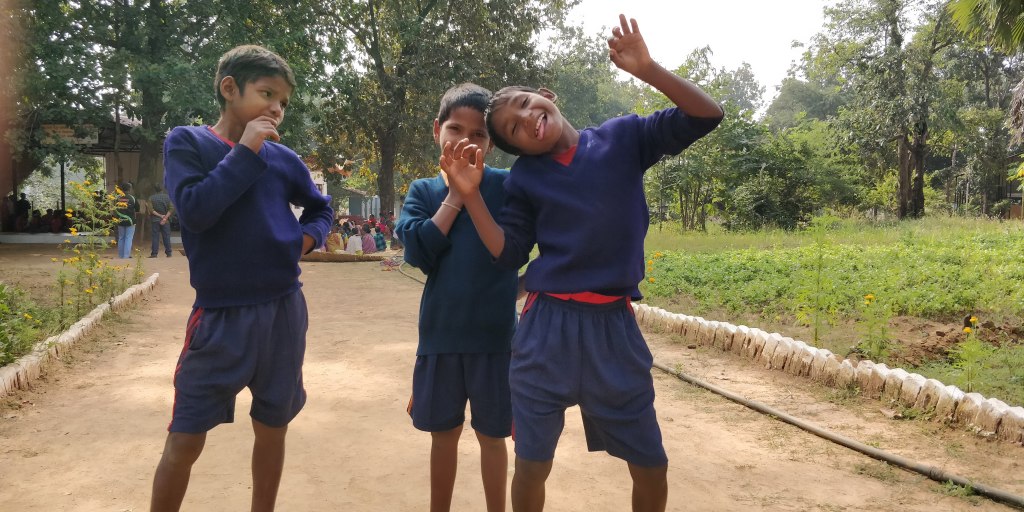
The three musketeers of Sadhna..All three spoke fluent English and accompanied me everywhere in the school

We reached the village of Nelgunda at around 8:30 am. It was a small and humble settlement spotted mostly with mud huts. Every hut in this tribal area is made of local materials. The walls are erected with yellow soil and rice husk. The roof is supported by timber from the forest which is used for building strong trusses and gussets. The outer roof, which is the most striking feature of a Madia hut, is made with deep-brown baked clay tiles. Few Gorga trees stand tall near almost every hut. Gorga is used to make a local beer which is in great demand during the winters. Every household brews its own. Those who don’t get their supplies from the neighbours can always climb a tree, bring down some beverage and concoct their own mix on the go.   

After passing through the village, we entered the Sadhna school. We were welcomed by lovely students and I was assigned to three young students who would show me around the school. Chinnu, Chukku and Mangu were their names. To my surprise, all three spoke in fluent English. And I am talking about well thought out responses in English, not the ones that are pre-fed to them. They accompanied me for the entire day and told me many stories about their struggles and daily chores. To them, it was a normal course of life as it happens. Chakku travelled 6 kms every day, one way, to reach the village after crossing a thick jungle to get his education at Sadhna. Chinnu wanted to become a doctor. Mangu was rather shy, but I could see the storm brewing in his deep eyes. These tales of daily struggles made me feel very lucky and privileged.

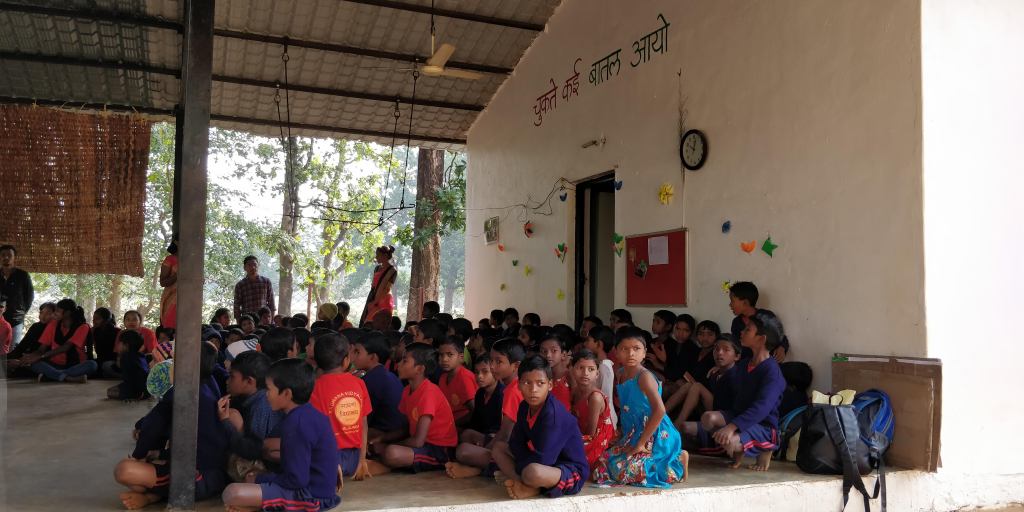
The cultural program started after sometime. The kids danced and presented street plays against tobacco chewing, which is a big health concern in these areas. I couldn’t help but notice the words on the main hall wall, “Chukte Kai, Batal Ayo”. These Madia words translated in Hindi mean “Chuk gaye…koi baat nahi!”, or “It’s okay to make mistakes..”.  The significance of these words cannot be understated. In the tribal areas, students witness a many learning obstacles, one significant being that no one ever has received any formal education of any kind in their communities. Most are first generation learners. They have to cope up with concepts from traditional syllabus devised keeping urban students in mind. For instance, “A for Apple” has no meaning to a tribal students in these areas. They have never seen an apple in their lives! This makes the learning process far more complex and challenging. Therefore, missing on concepts shouldn’t be punished but encouraged and addressed in any education curriculum here. 

Sadhna founders have tried to address this by developing their entire curriculum in Madia language. It derives many lessons from the way Madias live — as hunter gatherers, spending their days in the outdoors. It uses activity based learning techniques combining games and lessons from nature and their daily activities to teach them basic math, language, science and other such subjects. They also trained local boys and girls to become teachers and employ them here. This is critical because deep areas like Nelgunda have always been treated as ‘punishment postings’ for government teachers and staff. By hiring local boys and girls and training them, there is more accountability and performance is better.

“Chukte Kai, Batal Aaya” in Madia means It’s okay to miss. The idea of perfection in education is highly flawed. We must accept that every child learns differently.

Post a sumptuous lunch of daal and chawal served langar style on a leaf plate, the village elders sat down for some serious business with me. They informed me about the recent firing by the police in which two villagers were killed. While the police contended that these two were Naxal militia, the villagers gave a written representation that the two were simple villagers who were forced by the naxals to bring food for them in the forest they were camping in. It was no fault of the villagers and neither did they have a choice. 

Incidents like these have presented an ethical dilemma that confounds me to this day. The State’s police machinery has to do its job in defending it from the Naxal threat. However, once  every while, simpleton villagers with no association with the naxals or the State get entangled. They are sandwiched between the two behemoths and only end up paying the price with their blood. Then who is to blame? The State for its long apathy to the conditions of the tribals, against which the whole Naxal movement revolted and finally woke up the giant State from its slumber? Or the Naxals for using the innocent tribals as their resource base? The question continues to linger on my mind as my journey in Bhamragad evolves every moment. 

What is UPSC looking for in Mains?

Great question for UPSC CSE aspirants! No one can ever for sure know what the examiner is looking for. However, it can be understood to some extent from many topper copies available out there, and the known fact that UPSC invites top professors to evaluate answer sheets. I got over 460 marks in GS and almost 160 in Essay. I feel I had figured out answer writing (both long format — essay and short format — GS) to some extent. Here are my two cents on what UPSC examiner is looking for:

  • First, Depth & breadth of Content
    • Content of the answer must address the main points that have been asked in the question. The content must touch upon all the broader aspects as well as go deep enough so as to satisfy the examiner that you are well aware and have presented that awareness on the paper.
    • For example, as you can see in the below answer, substantial points of the Section 124 have been covered, with keywords such as ‘self-censorship’, Article 19, Kedarnath Case etc. to provide significant substance to the answer. Don’t present your personal views!
    • Second, UPSC asks two types of questions: (1) simple straight forward ones where you need to provide points directly (2) convoluted ones with long statements that are often just misleading you in some other direction.
      • Your job is to identify the main keywords and what is actually been asked in the question to answer it comprehensively.
      • I will provide examples of both type of questions here: First is a simple question with straight forward info required (MAINS 2018 question).. Second is a convoluted one.
  • This is a more complex question. Note here that the statement provided by UPSC has nothing to do with the actual question. The actual question is simply asking the role of SHGs and measures taken by government to promote SHGs. Just answer these two points! Ignore the rest!
  • Third, Presentation of Content
    • Presentation must be done in such a way so as to improve the overall ‘readability of the answer’. As you can see below, I have used a table to answer the question asked in MAINS 2017 question.
  • Like the above, use Relevant diagrams/charts etc. to answer the question.
  • Fourth, Relevant keywords and data points to support your points
    • These include constitutional articles, points from Economic survey and other reports, data such as GDP/employment/share of various sectors etc., remember name of reports and quote them where necessary, commission report.
  • Fifth, Don’t provide personal opinion. Build your argument on solid data points and reports and provide well-accepted views only. You will stand out not because you have written something different but because you have written WHAT IS EXPECTED.
  • What gets you those extra 1–3 marks in a question
    • Clarity of language and precision. If you dilly dally around a question, the examiner will understand you don’t know the answer or you don’t know how to express. Therefore, get straight to the point and answer the MAIN QUESTION/questions asked. Note the points provided by me above.
    • You DON’T NEED TO WRITE CATCHY INTROs and CONCLUSIONS. They don’t get marks. What get marks is if it is relevant, to the point and simple. See the above answers for introductions. Again, keep it to the point and what is being asked. My book 110+ in GS 2 also has 2017 and 2018 GS 2 paper solved where you can refer to some questions.
      • Many questions don’t even need an intro and conclusion. For example, a question such as (Mains 2018 question): “The Comptroller and Auditor General (CAG) has a very vital role to play.” Explain how this is reflected in the method and terms of his appointment as well as in the range of powers he can exercise. (10)
      • Here, you don’t need to provide an introduction if you can’t come up with one. Just provide points of his term and appointment method and range of powers. You will get good marks.
  • Finally, Re-read the question and make sure you understand it. Read it again while answering the question so that you don’t miss vital parts. Also, use keywords from the question as headings or sub-headings to make it easier for examiner to follow your answer.

Hope this helps!